CS2 Skins for Beginners: The Complete Starter Guide

Sukie · Founder & Market Tracker
Sukie has tracked the Counter-Strike skin economy since 2023, maintaining a price-history spreadsheet that covers 400+ skins and testing every major marketplace with her own inventory. She writes and updates every guide on CS2 Skin Prices herself.
Last updated: 2026-07-31
This guide to CS2 skins for beginners covers everything I wish someone had told me before my first purchase: what skins actually are, how you get them, what different tiers cost, and the handful of mistakes that separate a fun first month from an expensive one. Counter-Strike's item economy looks intimidating from the outside — wear ratings, float values, pattern indexes, trade holds — but the core of it fits in one honest page, and that is what this one tries to be.
A quick framing before we start: skins are cosmetic. They change how a weapon looks, never how it shoots. What makes them interesting is that they carry real market value — the whole ecosystem was estimated at roughly $6.7-8 billion in 2026 — and that value moves every day. You do not need to care about any of that to enjoy a $4 rifle skin. But understanding how the machine works keeps you from feeding it money by accident.
What CS2 Skins Actually Are
A skin is a weapon finish — a texture applied to a gun, knife, or pair of gloves in Counter-Strike 2, which has been free-to-play since 2018 (as CS:GO) and relaunched as CS2 in 2023. Skins give zero gameplay advantage. No extra damage, no faster reload, nothing. A $0.50 AK-47 skin and a $50,000 AWP Dragon Lore fire identical bullets.
What makes skins different from cosmetics in most games is that they are tradeable items with open market prices. Every skin sits in your Steam inventory as a distinct object with its own wear value, and you can list it for sale to other players. Prices are set entirely by supply and demand — Valve does not price skins, players do. That is why a discontinued case can quietly triple over two years while a new release bleeds value for months.
Each individual skin also has properties that make it more or less valuable than another copy of the same finish: its wear tier (Factory New down to Battle-Scarred), its exact float value, its pattern seed on certain finishes, and any stickers applied to it. Two AK-47 Slates can differ in price by 40% on these details alone. You do not need to master this on day one — you just need to know the details exist, so a price gap between two identical-looking listings does not confuse you.
The Four Ways You Get Skins
Every skin in circulation entered the economy through a small number of doors, and knowing them tells you where your own skins can come from:
- Weekly drops. Level up your weekly XP bar and you receive a free drop — usually a low-value skin or a case. CS2 also added the Armory, where earned stars redeem for specific collections. Free, slow, and the floor of the economy.
- Case openings. Cases drop from playing but require a key (around $2.50) to open. The odds are brutal: roughly 0.64% for a Covert (red) skin and about 0.26% for a gold — a knife or gloves. Our breakdown of CS2 case opening odds runs the full math, but the short version is that opening cases is entertainment, not acquisition.
- Buying on a market. The Steam Community Market lets you buy almost any skin instantly with Steam wallet funds. Third-party marketplaces exist too, with real-cash payouts and different fee structures — and different risks.
- Trading with other players. Direct trades through Steam, subject to Steam Guard rules and trade holds. This is where most scams live, so treat it as an advanced route.
For a beginner, buying exactly the skin you want on a market beats every other route on cost per skin you actually like. Cases are a lottery; drops are a trickle; trades are a skill. If there is one rule of cs2 skins for beginners worth memorizing, it is this: buy the exact skin you want, and never gamble to obtain it.
What Skins Cost: From Ten Cents to Seven Figures
The price range in this economy is wider than almost any other collectibles market. A rough map of the tiers, with hedged mid-2026 levels:
- Under $1: thousands of stickers, graffiti, and consumer-grade skins from about $0.03 up. Perfectly fine for filling an inventory cheaply.
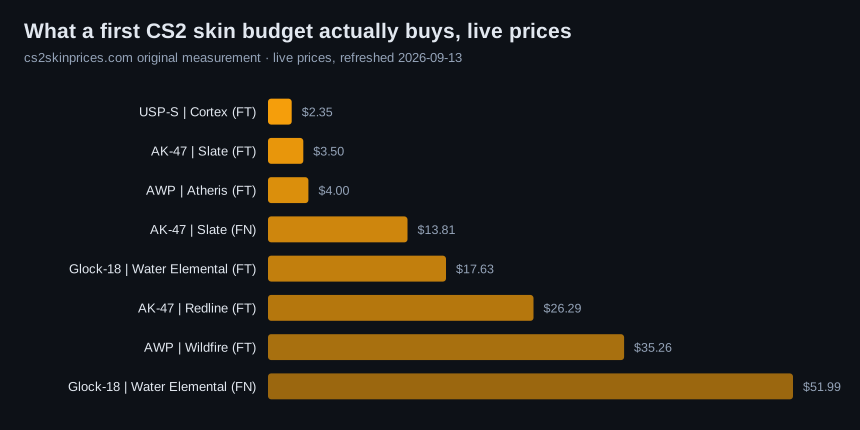
- $1-10: the beginner sweet spot. Genuinely good-looking finishes like the AK-47 Slate or Glock-18 Water Elemental live here, typically around $4-6 in Field-Tested condition as of mid-2026.
- $10-100: iconic mid-tier skins — AK-47 Redline, AWP Asiimov — plus most StatTrak versions of budget finishes.
- $100-1,000: entry-level knives and gloves. If that is your eventual goal, our guide to knife and glove combos under $100 shows how far a modest budget stretches.
- $1,000+: low-float rare knives, Souvenir items, and collection classics.
- Six and seven figures: trophy items like #1-pattern Case Hardened Blue Gem knives, with private valuations reported above $1 million.
The overall market was estimated at roughly $6.7-8 billion in 2026 per the SteamAnalyst 2026 market report — context worth having, because it explains why price behavior here resembles a real asset market, cycles and all.
Wear and Float: The One-Screen Version
Every skin is minted with a permanent float value between 0.00 and 1.00 — a number that never changes and determines how scratched the finish looks. Floats map to five named wear tiers:
- Factory New: 0.00-0.07
- Minimal Wear: 0.07-0.15
- Field-Tested: 0.15-0.38
- Well-Worn: 0.38-0.45
- Battle-Scarred: 0.45-1.00
Lower float means cleaner finish means higher price, all else equal. But the visual difference varies enormously by skin: some finishes look nearly identical from Factory New through Field-Tested, which makes Field-Tested the best value tier for most beginners. The side-by-side comparisons in Factory New vs Minimal Wear vs Field-Tested show exactly which skins hide their wear well.
This is the single highest-leverage concept for a new buyer, and it goes deeper — float caps, pattern seeds, how to inspect a specific listing's float before buying. Our float value hub covers all of it, and BLAST's explainer on float value and wear levels is a solid outside reference if you want a second telling.
The Mistakes Every New Buyer Makes
I keep a spreadsheet of weekly prices for 400+ skins, started in 2023, and the most useful thing it has taught me is how predictable beginner losses are. The same four mistakes, over and over:
- Buying at hype peaks. When CS2 was announced on March 22, 2023, mid-tier rifle skins in my sheet rose an average of about 30% within two weeks — and many gave most of it back over the following months. News spikes are when experienced holders sell, not when beginners should buy. If a skin is all over your feed today, its price already knows.
- Ignoring the 15% Steam fee. Sell a skin on the Steam Market and roughly 15% goes to fees — and the proceeds land in your Steam wallet, which can never be cashed out to a bank. A skin must rise meaningfully before you break even in wallet terms, and wallet terms are not dollars.
- Falling for scams. Fake trade bots, phishing links disguised as tournament votes, "I'll pay you outside Steam" offers. The patterns are catalogued in our guide to CS2 skin scams — read it before your inventory is worth stealing, not after.
- Treating cases as a way to get skins. At 0.64% Covert odds, cases convert money into disappointment with remarkable efficiency. Budget for them as entertainment if you enjoy the ritual; never as shopping.
Avoid these four and you are ahead of most first-year participants, no market skill required.
A Sensible First Month (and Your First $20)
Here is the path I suggest to anyone starting from zero. Week one: play, collect your free weekly drop, and buy nothing. Watch the prices of five skins you like on the Steam Market and notice how much they move. Week two: if you plan to keep playing, consider Prime Status (about $15, one-time) — it improves matchmaking quality and gates the weekly drop system, so it doubles as a hedge on your future drops. Weeks three and four: make your first small purchases with a hard budget.
A concrete example of how far $20 goes on cs2 skins for beginners, at hedged mid-2026 prices:
| Slot | Example pick | Approx. cost (mid-2026) |
|---|---|---|
| Rifle (AK) | AK-47 Slate, Field-Tested | around $5 |
| Rifle (M4) | M4A1-S Nightmare, Field-Tested | around $5 |
| Pistol | Glock-18 Water Elemental, Field-Tested | around $4 |
| AWP | AWP Atheris, Field-Tested | around $4 |
| Reserve | Left in wallet for a sale you spot later | about $2 |
That is a full loadout of skins people genuinely like, for the price of two case keys and three cases' worth of lottery tickets. When you are ready to pull the trigger, the step-by-step walkthrough in our first CS2 skin buying guide covers evaluating individual listings so you do not overpay on float or timing.
Frequently asked questions
Are CS2 skins pay-to-win?
No. Skins are purely cosmetic and change nothing about how a weapon performs. A default AK-47 and a $10,000 one have identical damage, accuracy, and handling. The entire value of a skin is visual and social.
How do I get CS2 skins for free?
Two built-in routes: the weekly drop you earn by leveling up your XP bar, and the Armory, where stars earned from play redeem for items. Both are slow and the drops skew low-value, but they are genuinely free. Everything else — cases, markets, trades — involves spending or already owning something.
How much should a beginner spend on skins?
Start with $10-20 total. That buys a full loadout of well-liked budget skins in Field-Tested condition, which is enough to learn how listings, floats, and fees work. Only scale up once you have watched prices move for a month and know you actually enjoy this side of the game.
Is Prime Status worth buying?
For most people who plan to keep playing, yes. It costs about $15 one-time, improves matchmaking quality, and gates access to the weekly drop system. Think of it as a hedge: even if you never buy another skin, the drops slowly return value.
Can I turn my skins back into real money?
Not through Steam. Selling on the Steam Community Market takes roughly a 15% fee and pays into your Steam wallet, which can only be spent on Steam and never withdrawn to a bank. Third-party marketplaces do pay real cash, but they carry their own fees and counterparty risk, so research any platform carefully before moving valuable items.
What is float, in one sentence?
Float is a permanent number between 0.00 and 1.00 assigned to each skin when it is created, and it determines how worn the finish looks — 0.00-0.07 is Factory New, 0.45-1.00 is Battle-Scarred. Lower float generally means a higher price for the same skin.
Why did the skin I just bought drop in price?
Normal volatility, most likely. Skin prices move daily with supply, demand, game updates, and broader market cycles, and swings of 5-15% in a week are common on mid-tier items. If you bought right after a hype event, some giveback is almost expected. It only matters if you intended to resell soon.
Are skin gambling and jackpot sites safe to use?
We do not recommend them. Third-party gambling sites operate outside Valve's rules, have a long documented history of rigged outcomes and exit scams, and can get accounts trade-banned. If you enjoy skins, buy skins — the odds are infinitely better than any jackpot wheel.
Can Valve delete or take away my skins?
Skins live on your Steam account under Valve's subscriber agreement, so in a strict legal sense you license them rather than own them outright. In practice Valve does not remove items from accounts in good standing; the realistic risks are account theft and trade bans for rule violations, both of which you control with good security habits.
What is the safest place to buy a first skin?
The Steam Community Market. It is built into Steam, cannot scam you on delivery, and shows full price history for every listing. You pay a convenience premium versus third-party sites, but for a first purchase under $20 that premium is cheap insurance while you learn.